
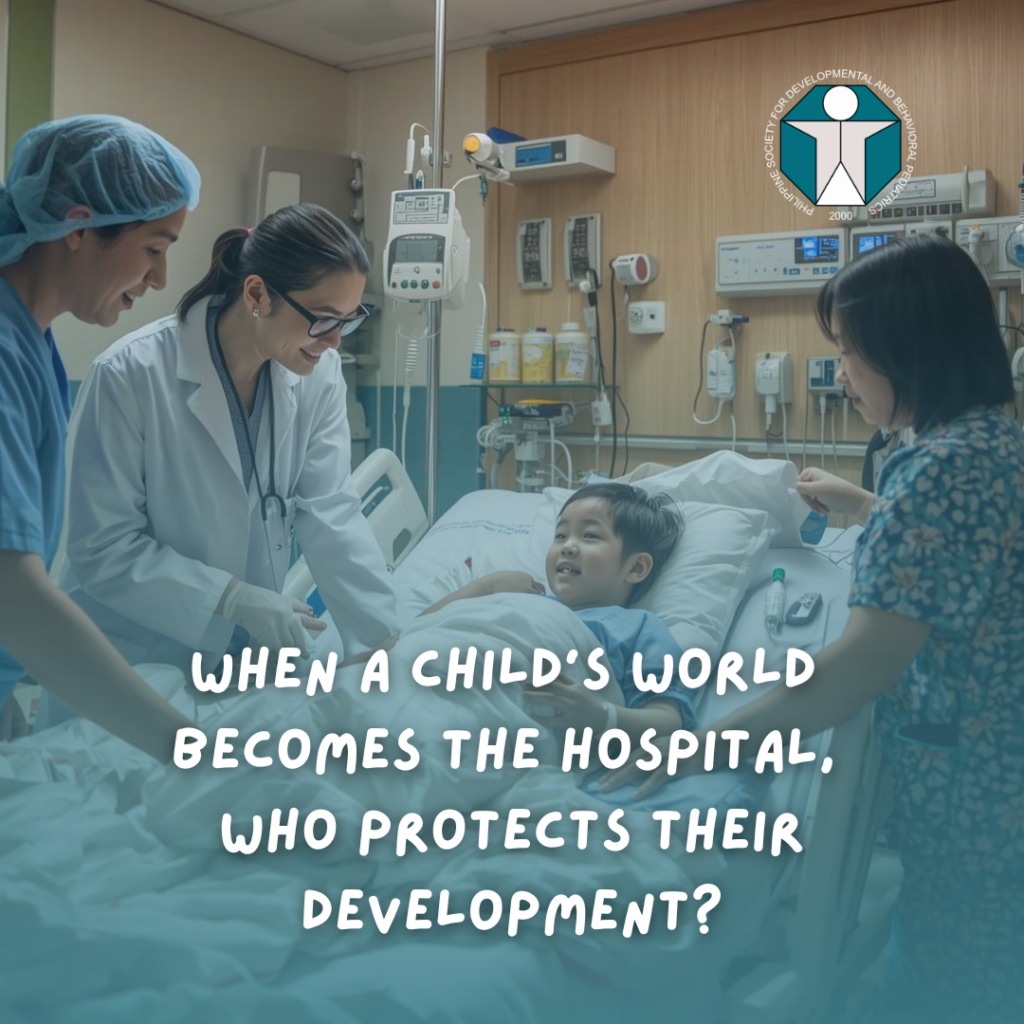
A DEVELOPMENTAL PERSPECTIVE ON CARING FOR CHILDREN WITH LONG-TERM MEDICAL CONDITIONS
In some homes, the day begins not with school bags, but with medicines, feeding tubes, or blood sugar checks. Calendars are filled with follow-ups instead of field trips.
There are children who know hospital rooms better than playgrounds, parents who sleep on plastic chairs, siblings who wait quietly, and professionals who carry these stories with them every day.
Behind every diagnosis is still a childhood, and every act of care helps that child grow, not just survive.
It shows up in small, ordinary ways:
- A parent staying beside the hospital bed through the night
- A grandparent preparing the child’s favorite soup
- A sibling saving a seat at the table
- A nurse who speaks gently before a procedure
- A teacher who keeps lessons ready for when the child returns
These moments may seem simple, but they help children feel safe, valued, and understood. And when children feel safe, their brains and bodies cope better with stress, pain, and uncertainty.
When the Body Is Sick, the Brain and Behavior Are Affected Too
When a child is diagnosed with a long-term or chronic medical condition, most conversations immediately focus on laboratory tests, medicines, procedures, and survival.
These are important. They save lives.
But many Filipino parents quietly carry another question in their hearts:
“Ano na ang mangyayari sa paglaki niya?”
“Makakapag-aral pa ba siya nang maayos?”
“Magiging normal pa ba ang buhay niya?”
Chronic illnesses such as asthma, epilepsy, cancer, diabetes, congenital heart disease, kidney or liver disease, autoimmune conditions, chronic pain, genetic syndromes, and rare diseases do not only affect the body.
They also influence a child’s brain, emotions, behavior, learning, sleep, and relationships.
These conditions do not only affect the body but also shape a child’s:
- Attention and memory
- Mood and behavior
- Energy and sleep
- School performance
- Friendships and confidence
Modern medicine has helped more children survive serious illnesses. But survival alone is not the goal.
Every child still deserves a childhood.
Why Development Matters in Chronic Illness
Even with illness, children still need to:
- Learn new skills
- Make friends
- Build confidence
- Explore independence
- Discover who they are
But chronic illness can interrupt these.
A child may:
- Miss many days of school
- Feel anxious about symptoms or procedures
- Lose confidence in their abilities
- Become socially isolated
- Depend too much on adults
Sometimes, the effects are not obvious.
A child may look physically fine, but:
- Struggles to keep up in classGets tired easily
- Becomes irritable or withdrawn
- Has trouble sleeping
In Filipino homes, this may look like:
- A child who used to be playful but now stays in the corner with a cellphone
- A student who was once “honor roll” but now cannot finish homework
- A child who refuses to join family outings because of fear or fatigue
This is where a developmental perspective becomes important.
The Developmental Care Team
You don’t need a big team, you need the right team
Children with chronic illness are best supported by a developmental care team, a group of people who look beyond the disease and focus on how the child is living, learning, and growing.
At the center of this team are the parents and caregivers.
In Filipino families, this may include:
- Parents
- Lolo and lola
- Tita or tito
- Yaya or helper
They are not just assistants in care.
They are the child’s main source of safety, comfort, and growth.
Around them, the team may include:
- Primary pediatrician – the main doctor who oversees the child’s overall health
- Subspecialists – such as cardiologists, neurologists, or oncologists
- Developmental pediatrician – connects medical care to learning, behavior, and daily functioning
- Therapists – for speech, feeding, movement, or self-care
- Psychologist or counselor – for coping, anxiety, or behavior
- Child life specialist – helps the child understand hospital experiences through play
- Teachers or SPED team – supports school participation
- Social worker – helps families access resources
Not every child needs all of them at once.
The goal is not the biggest team.
The goal is the right team at the right time.
When Should the Developmental Team Step In?
Ideally, early and not only when problems appear.
For example:
- When a child is first diagnosed with cancer or heart disease
- After repeated hospitalizations
- When the child stops attending school regularly
- When behavior or mood changes
- When the family feels overwhelmed
- During transitions like starting school or adolescence
Think of it like maintaining a house during typhoon season.
You don’t wait for the roof to collapse.
You check the structure, reinforce weak areas, and prepare early.
Developmental care works the same way.
What Developmental Care Looks At
1. The whole child, not just the diagnosis
Not only:
- Lab results
- Imaging
- Medications
But also:
- School performance
- Friendships
- Sleep
- Mood
- Daily functioning
2. Development at every age
Each stage has different tasks:
- Toddlers: learning to eat, walk, and explore
- Preschoolers: learning independence
- Grade school children: building skills and friendships
- Teenagers: forming identity and independence
Illness can interrupt these stages.
For example:
- A child with frequent hospital stays may not learn to dress himself.
- A teen with diabetes may struggle with independence because parents are too afraid to let go.
3. Emotional and behavioral health
Children with chronic illness are more likely to have:
- Anxiety
- Sadness
- Irritability
- Sleep problems
- School refusal
These are not signs of weakness.
They are normal reactions to stress, pain, and uncertainty.
4. Family wellbeing
In many Filipino families:
- One parent may stop working
- Grandparents take over caregiving
- Siblings feel neglected
- Financial stress builds up
Developmental care also supports the family system, not just the child.
When to Be Careful and When to Let Them Grow
One of the hardest parts of raising a child with chronic illness is knowing when to say:
“Mag-ingat ka.”
and when to say
“Sige, subukan mo.”
Parents naturally want to protect their child.
But too many restrictions can limit development.
Imagine a child as a bamboo plant.
Bamboo grows strong because it bends in the wind.
If you keep it in a box to protect it, it never learns to stand tall.
Children also grow through:
- Trying
- Failing
- Practicing
- Exploring
Overprotection can lead to:
- Low confidence
- Fear of normal activities
- Social isolation
- School avoidance
Sometimes, the child becomes more limited by fear than by the illness.
The GOAL: Safe participation, not total protection
Instead of asking:
“Pwede ba siya dito?”
Ask:
“Paano siya makakasali nang ligtas?”
Examples:
- A child with asthma can still join sports, with an inhaler and warm-up.
- A child with diabetes can attend sleepovers, with planning for medications
- A child with heart disease can join PE, with pacing and with breaks
- A child with chronic pain can return to school gradually
Practical Tips for Filipino Families
1. See the child beyond the illness
Talk about:
- Their hobbies
- Their dreams
- Their favorite foods or shows
Not only their symptoms.
2. Keep life as normal as possible
Even in illness:
- Eat meals together
- Keep bedtime routines
- Celebrate birthdays
- Attend family gatherings when safe
Normal routines build emotional stability.
3. Encourage independence
Let them:
- Choose their clothes
- Help with simple chores
- Pack their own school bag
Even small responsibilities build confidence.
4. Stay connected to school and friends
- Message the teacher
- Ask for accommodations
- Let the child join online class if needed
- Encourage playdates or video calls
Social connection is part of treatment.
5. Watch for emotional changes
Look for:
- Increased irritability
- Withdrawal
- Sleep problems
- School refusal
These may be signs your child needs support.
Making Hospital Life Easier
Many Filipino children with chronic illness spend long days or weeks in hospitals.
To make it easier:
- Bring a favorite blanket or toy
- Hang drawings or photos near the bed
- Keep bedtime routines
- Schedule video calls with family
- Celebrate small milestones
A hospital room can still hold:
- Laughter
- Stories
- Games
- Hope
For Medical Professionals
Every procedure is not just a medical act. It is a developmental moment.
- Call the child by name
- Speak at eye level
- Use simple language
- Allow parent presence
- Offer choices
A child may forget the exact procedure, but they will remember:
- Who was kind
- Who listened
- Who made them feel safe
The Bigger Question
Medicine today can save lives that once would have been lost.
But the real question is not only:
“Nakokontrol ba ang sakit?”
(Is the illness controlled?)
It is also:
“Nabubuhay ba nang maayos ang batang ito?”
(Is this child able to live well?)
Because a child with chronic illness still needs:
- Friends
- Play
- School
- Independence
- Dreams
Practical Tips by Common Chronic Illness
Small daily adjustments can protect your child’s development, confidence, and quality of life.
ASTHMA
Common challenges: fatigue, missed school days, fear of physical activity.
Practical tips:
- Keep an inhaler in the school bag and at home
- Teach the child to recognize early breathing symptoms
- Encourage sports with proper warm-up and medication
- Inform teachers about triggers (dust, chalk, smoke, etc)
- Keep the home environment as smoke-free as possible
Love in action:
“Let’s help you stay active safely,” instead of “Bawal ka na maglaro.”
EPILEPSY
Common challenges: anxiety, attention problems, stigma, overprotection.
Practical tips:
- Teach simple seizure safety rules (no swimming alone, avoid heights)
- Inform school staff about seizure first aid and medication effects
- Maintain regular sleep routines
- Watch for learning or behavior changes after medication adjustments
- Encourage social activities with supervision
Love in action:
Give your child freedom within safe limits, not fear-based restrictions.
CANCER
Common challenges: fatigue, emotional distress, missed school, fear of procedures.
Practical tips:
- Keep contact with classmates through messages or video calls
- Allow the child to choose small daily activities
- Maintain simple routines even in the hospital
- Watch for mood changes or sleep problems
- Ask about school re-entry plans
Love in action:
Celebrate small wins: finishing a meal, walking a few steps, or completing a drawing.
DIABETES
Common challenges: anxiety about hypoglycemia, feeling “different,” school issues.
Practical tips:
- Teach the child age-appropriate self-monitoring skills
- Inform teachers about snack times and hypoglycemia signs
- Keep emergency glucose in school and at home
- Encourage participation in normal activities and sleepovers with planning
- Praise responsibility, not just blood sugar numbers
Love in action:
“You’re learning to take care of your body. I’m proud of you.”
CONGENITAL HEART DISEASE
Common challenges: fatigue, learning differences, delayed physical endurance.
Practical tips:
- Allow participation in PE with pacing and rest breaks
- Watch for attention or learning concerns
- Encourage light daily movement
- Maintain regular sleep routines
- Coordinate with school for activity modifications and medications
Love in action:
Focus on what the child can do, not just limitations.
CHRONIC PAIN CONDITIONS
(e.g., functional abdominal pain, headaches, musculoskeletal pain)
Common challenges: school avoidance, anxiety, sleep problems, decreased activity.
Practical tips:
- Keep school attendance as regular as possible
- Encourage gentle daily activity, even with some pain
- Maintain a consistent sleep schedule
- Avoid excessive rest or overprotection
- Consider psychological support (CBT, coping skills)
Love in action:
“I know it hurts, and I believe you. Let’s help you stay active slowly.”
GENETIC OR RARE DISORDERS
Common challenges: developmental delays, social differences, frequent medical visits.
Practical tips:
- Focus on strengths and interests
- Start therapies early when needed
- Build predictable daily routines
- Connect with support groups or other families
- Celebrate progress, even if it is slow
Love in action:
Progress is not always fast, but it is still progress.
KIDNEY DISEASE
Common challenges: fatigue, fluid or diet restrictions, frequent hospital visits.
Practical tips:
- Explain diet and fluid rules in simple terms
- Allow the child to help track their intake
- Maintain school participation with an IEP when possible
- Encourage hobbies that build confidence
- Watch for mood or withdrawal
Love in action:
Involve the child in decisions to build independence and trust.
LIVER DISEASE
Common challenges: fatigue, growth concerns, hospitalizations, emotional stress
Practical tips:
- Keep routines consistent at home and during admissions
- Support nutrition as advised by the medical team
- Encourage gentle play and creative activities
- Maintain school contact during long absences
- Watch for anxiety or behavioral changes
Love in action:
Focus on comfort, presence, and daily connection
AUTOIMMUNE CONDITIONS
(e.g., lupus, juvenile arthritis)
Common challenges: pain, fatigue, mood changes, medication side effects.
Practical tips:
- Balance rest with gentle activity
- Watch for emotional changes, especially on steroids
- Inform school about fatigue and pain days
- Encourage participation with modifications
- Build predictable routines
Love in action:
Help your child feel capable, not fragile.
One Rule for All Chronic Illnesses
Protect the child’s participation, not just their health.
Ask:
- Can my child still go to school?
- Can they still play, even in small ways?
- Can they still build independence?
Because treatment helps the body heal.
But daily life, connection, and love help the child grow.
A Call to Action
For parents:
Your love, routines, and encouragement are part of the treatment. Ask not only about medicines, but also about school, play, confidence, and independence.
For professionals:
Every clinic visit and hospital stay is a developmental moment.
Look beyond the diagnosis. Ask about function, participation, and quality of life.
Because in the end, the goal is not just survival.
The goal is a child who grows, learns, connects, and hopes.
A child who lives, not just a child who is treated.
References
Eccleston, C., Fisher, E., Howard, R. F., Slater, R., Forgeron, P., Palermo, T. M., … Birnie, K. A. (2021). Delivering transformative action in paediatric pain: A Lancet Child & Adolescent Health Commission. The Lancet Child & Adolescent Health, 5(1), 47–87.
Feldman, H. M., Voigt, R. G., & others. (2023). Developmental–Behavioral Pediatrics (5th ed.). Elsevier.
Palermo, T. M. (2012). Cognitive-behavioral therapy for chronic pain in children and adolescents. Oxford University Press.
Wiener, L., Kazak, A. E., Noll, R. B., Patenaude, A. F., & Kupst, M. J. (2015). Standards for the psychosocial care of children with cancer and their families: An introduction to the special issue. Pediatric Blood & Cancer, 62(S5), S419–S424.
American Academy of Pediatrics Committee on Hospital Care and Child Life Council. (2014). Child life services. Pediatrics, 133(5), e1471–e1478.
Long, D., Minogue, J., Charles, K., Morgan, S., Schults, J., Le Marsney, R., Stocker, C., Gibbons, K. S., & Dow, B. (2024). Neurodevelopmental outcome and quality of life in children admitted to the paediatric intensive care unit: A single-centre Australian cohort study. Australian Critical Care, 37(6), 903–911.
Mastorci F, Lazzeri MFL, Ait-Ali L, Festa P, Pingitore A. Chronic Disease in Pediatric Population-A Narrative Review of Psychosocial Dimensions and Strategies for Management. Children (Basel). 2025 Jul 23;12(8):967. doi: 10.3390/children12080967. PMID: 40868419; PMCID: PMC12385117.
Thomas, S. (2024). Quality of life in children with chronic health conditions and its contribution to unmet supportive care needs of their parents. Child: Care, Health and Development.
Hasanah, I. et al (2024) Factors related to quality of life in children with chronic illness from their own perspectives: A cross-sectional study. Journal of Pediatric Nursing.