
A Parent’s Guide to Developmental Checkups
Find out what surveillance, screening, and assessment really mean for your child.
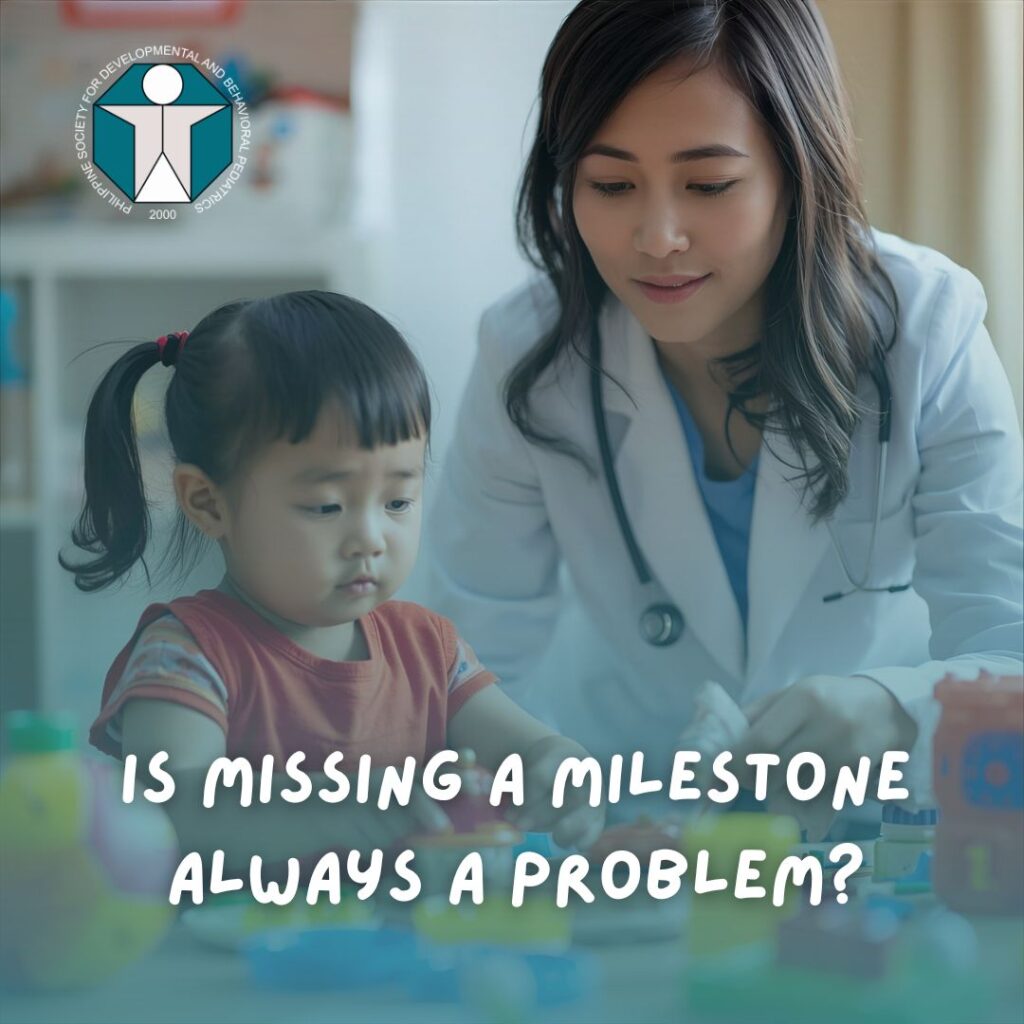
You celebrate every “first”—first smile, first step, first word. But what if the “next” doesn’t come on time? How do you know when it’s just normal variation, and when it needs extra attention?
DEVELOPMENTAL PROMOTION:
Supporting Growth Before Problems Arise
Developmental promotion focuses on nurturing and strengthening. It’s about creating everyday opportunities that help children reach their full potential — through play, positive relationships, and responsive caregiving.
It is done for all children — from birth onwards. Parents, family members, healthcare providers, teachers, community members and policy makers all play a role in developmental promotion by:
- Supporting safe, stimulating environments for exploration and connection
- Reinforcing routines that build independence, empathy, and confidence
- Incorporating healthy lifestyle habits early (good sleep, good nutrition, daily movement and exercise)
- Encouraging play, talk, reading, and interaction at every age
- Providing platforms and opportunities where families, professionals, advocates and experts come together to guide parents on age-appropriate activities that support learning, language, and emotional growth
In short, developmental promotion is proactive care and preventive care in all aspects of a child’s life (home, school, community). It is what we do before a concern arises, so that every child is supported not only to catch up but to move forward and thrive.
👉 Developmental promotion is like watering and nurturing a garden before weeds even appear.
You don’t wait for a plant to wilt before caring for it, you tend to it daily so it grows strong and healthy.
Developmental promotion works the same way.
Instead of waiting for delays or problems, we support a child’s growth daily through healthy lifestyle habits (good nutrition, sleep, exercise), developmental stimulation (talking, playing, reading, routines), and attuned, responsive care. These are the “vitamins” of brain development — small, consistent habits that build strong foundations so fewer problems arise later on.
DEVELOPMENTAL CARE:
Observe, Evaluate, Navigate
Caring for a child’s development doesn’t end at home. It continues through developmental care, where families and professionals work together to monitor growth, celebrate progress, and act early when something feels off.
Pediatric care isn’t just about vaccines, height, and weight, it’s also about keeping track of how children think, move, communicate, and connect with others. Knowing how doctors check development can help parents feel more confident.
Families should know about three important steps in developmental check-ups
- Developmental surveillance
- Developmental screening
- Comprehensive developmental assessment
1. Developmental Surveillance: Continuous Monitoring at Every Visit
Think of developmental surveillance as your pediatrician’s “continuous watch” over your child’s development. At every well-child visit, doctors don’t just measure height or check ears, they also:
- Ask about your concerns and your child’s daily progress
- Review milestones and past history
- Observe play, speech, and interaction
- Track risks, strengths, and protective factors over time
- Who is it for: All children — from birth onward
- When: At every pediatric well-child visit
- Duration: 5–15 minutes during the clinic interview and physical exam
- Who can do it: Board certified pediatrician
- Teamwork: Parents play a key role by sharing their daily observations and concerns, making them active partners in tracking their child’s development.
- Trained primary care providers during regular check-ups with children and families, and may also be carried out by trained professionals in schools or community settings in the child’s daily life.
- When to refer: If surveillance shows red flags, professionals should refer for developmental screening or developmental assessment to trained professionals who are a part of a pediatric developmental care team.
📌 Why it matters: It’s not a one-time test, it’s a continuous story of your child’s growth done at every well child visit. This process ensures that concerns are spotted early.
👉 Like monitoring fever at home.
When your child feels warm, you don’t just check once and forget—you keep touching their forehead, checking if they’re sweating, eating, or acting differently. Surveillance in development is the same: your pediatrician checks progress at every visit, asks about your concerns, and observes changes over time. It’s continuous, not one-time.
2. Developmental Screening: Quick Checks to Spot Risks Early
Screening is like a “red flag detector.” It does not give a full picture of the child or a diagnosis, but it tells us if your child may need a closer look. Using short questionnaires or checklists (like ASQ, PEDS, M-CHAT, etc), doctors, nurses, or allied health professionals can quickly spot possible risks.
- Who is it for: All children — at recommended key ages or earlier as needed
- When: At ages 9, 18, and 30 months old (with autism-specific screens at 18 and 24 months old), even if the child has no concerns, as recommended by the Philippine Pediatric Society (PPS), Philippine Society for Developmental and Behavioral Pediatrics (PSDBP) and the American Academy of Pediatrics (AAP)
- Duration: 5–15 minutes
- Who can do it: Professionals trained in Developmental Screening such as – pediatricians, pediatric medical subspecialists, family physicians, developmental psychologists/psychologists, nurses, therapists, early childhood educators, social workers
- Teamwork: If screening shows red flags, professionals should coordinate for further assessment with a Developmental Pediatrician or a medical subspecialist who is part of a pediatric developmental care team.
📌 Why it matters: Screening catches things parents and doctors might not always see during regular visits. A positive screen means, “Let’s check further”—not an automatic diagnosis.
👉 For example: Like using a thermometer.
The thermometer quickly tells you if your child’s temperature is higher than normal. It doesn’t tell you the exact cause—whether it’s viral, bacterial, or something else—but it signals that you need to pay attention. Developmental screening works the same way: it’s a short test that raises a flag if something might be off, even if we don’t yet know why.
3. Comprehensive Developmental Assessment: The Full Picture
When questions remain after surveillance and screening, it’s time for a comprehensive developmental assessment. This is an in-depth evaluation led by a licensed, board certified Developmental/Neurodevelopmental Pediatrician.
- Who is it for: Children with identified delays, developmental, behavioral or learning concerns, or positive developmental screening results
- When: When red flags, delays, developmental, behavioral or learning concerns are detected through surveillance or screening
- Duration: Usually 1–2 hours, sometimes spread over sessions
- Process: Detailed history, structured observations, physical and neurologic medical examination, administration of standardized developmental assessment tests, and review input from specialists (as needed). The Developmental Pediatrician integrates all inputs—medical, developmental, behavioral, educational, and family context—into one cohesive picture.
- Who can do it: Licensed and board certified Developmental Pediatrician/Neurodevelopmental Pediatrician
- Teamwork: Follow up monitoring and interdisciplinary referrals may involve psychologists, speech therapists, occupational and physical therapists, pediatric neurologists, child and adolescent psychiatrists, nutritionists, and more
- Goal: To reach a comprehensive developmental and behavioral assessment/profile of the child, a diagnosis, and create a tailored care plan
📌 Why it matters: A diagnosis is more than a label—it provides a roadmap. Families get clarity, guidance, and an individualized plan to help their child thrive.
👉 For example: Like going to the doctor when fever persists.
If your child’s fever doesn’t go away or is very high, the doctor does a full check-up—asking about symptoms, doing a physical exam, sometimes ordering labs or tests. Only then can they make a diagnosis (like pneumonia, UTI, or dengue) and decide on the treatment plan.
A developmental assessment works the same way: it’s the complete evaluation that explains the cause and guides the right care plan.
👉 For example: Fever needs three levels of care: daily monitoring (surveillance), quick checking with a thermometer (screening), and a full doctor’s work-up if it doesn’t improve (assessment).
Child development follows the same principle:
Every fever eventually cools, every cough eventually clears but a missed chance in development can change the course of a child’s future.
By watching closely (surveillance), checking carefully (screening), and understanding deeply (assessment), we give every child the chance for early intervention, early counseling and eventually the gift of being seen for who they are and who they can become.
How results are shared matters just as much as the results themselves.
For many families, a developmental diagnosis can bring a mix of relief, worry, and hope. That’s why specialists need to know how to communicate findings with empathy, clarity, and respect.
Developmental Pediatricians and other professionals are trained not only to interpret test results but also to deliver them sensitively — explaining what the diagnosis means (and doesn’t mean), helping families process emotions, and guiding them toward practical next steps.
The Philippine Society for Developmental and Behavioral Pediatrics (PSDBP) and other training institutions include modules and mentorship on breaking difficult news, family-centered communication, and collaborative care planning. These help professionals stay compassionate, culturally sensitive, and child-centered even in complex cases.
DEVELOPMENTAL FOLLOW-UP:
Tracking Progress, Adjusting Care
Follow-up with your Developmental Pediatrician matters.
After the developmental assessment, families are encouraged to return to their Developmental Pediatrician for a follow-up visit—typically within 3 to 6 months, or sooner if there are major concerns or new symptoms. Follow-up is especially important during key developmental transition periods such as:
- Ages 0–3 years, the time when rapid brain and skill growth occurs
- 5–6 years, when they first enter into formal schooling)
- Around 9–12 years, when learning, social, and emotional demands increase
This visit allows the developmental pediatrician to review progress, update the care plan, and adjust interventions as your child grows and changes. In the Philippines, follow-up appointments can often be done online or onsite, giving families flexibility while ensuring continuity of care.
Here’s what usually happens during a follow-up:
- Review of Progress and Daily Function
Parents share updates about milestones, communication, play, behavior, sleep, feeding, school, and therapy progress. The Developmental Pediatrician asks questions like, “What new things can your child do?” and “What’s been challenging lately?” - Brief Physical and Neurologic Examination The Developmental Pediatrician does a quick routine health check possible diseases or health problems that contribute to new concerns or ongoing concerns.
- Integration of Reports
The Developmental Pediatrician reviews updates from therapists, teachers, or specialists. These reports help show how the child is doing in different settings — home, school, and therapy. - Brief Developmental Observation
The Developmental Pediatrician observes your child during play or structured activities. This helps assess new skills, attention, regulation, and interaction. Some standardized tools may be repeated to track growth. - Parent Coaching and Guidance
The Developmental Pediatrician discusses strategies you can use at home, reviews therapy goals, and suggests adjustments in daily routines, learning, or behavior management. - School and Therapy Coordination
The follow-up visit aligns everyone’s efforts — school, therapists, and family — so that goals remain consistent and progress stays on track. - Revisiting Diagnosis or Care Plan
As children grow, needs change. The Developmental Pediatrician may refine the diagnosis, modify recommendations, or order new tests if needed. - Next Steps and Follow-Up Plan The visit ends with a plan: updated goals, home strategies, and a timeline for the next review, depending on the child’s age and needs.
Research and medical guidelines all agree:
Children with developmental concerns need ongoing follow-up and coordination after diagnosis. The American Academy of Pediatrics (AAP) recommends continuous developmental check-ins and care coordination, especially for autism and ADHD. The Bright Futures program also builds regular developmental surveillance into every visit, while the NICE (UK) guidelines highlight the need for continuing review and specialist team support.
Simply put, science shows that a child’s needs and strengths change over time and care plans must change too.
When to loop back to the Developmental Pediatrician sooner
Regression or loss of skills, new seizures/tics, safety concerns or self-injury/aggression, major school failure or sudden behavior change, medication side-effects, or if goals stall despite good adherence.
The Developmental Pediatrician is your child’s partner.
The Developmental Pediatrician works with an interdisciplinary team and integrates all inputs—medical, developmental, behavioral, educational, and family context—into one cohesive picture.
Coordinating regularly with your Developmental Pediatrician ensures that every member of the care team is aligned, goals are consistent, and your child’s plan evolves as they do.
RIGHT HELP, REAL EXPERTS:
Making Sure Your Child’s Care is in Good Hands
Early detection saves time — but only when it’s done by qualified and accountable professionals.
Here’s how families and institutions can make sure the people doing developmental checks are legitimate, trained, and trustworthy.
1. Check for Professional Licensing and Accreditation
Each level of developmental care has specific professionals authorized to do it:
| Type of Care | Who Can Do It | Credential to Look For |
| Developmental Surveillance | Pediatricians, family physicians, nurses, midwives, teachers, or trained community workers under supervision | PRC license or DepEd registration; training certificate, training credentials from DOH, PSDBP, NCDA, UNICEF, or a similar recognized agency |
| Developmental Screening (use of a structured tool like PEDS, ASQ, or M-CHAT) | Pediatricians, nurses, allied health professionals, or teachers trained and certified in the specific tool | Training certificate for that tool, signed by a licensed facilitator |
| Comprehensive Developmental Assessment | Developmental Pediatrician/ Neurodevelopmental Pediatrician | PRC license + PSDBP certification or training hospital accreditation |
2. Look for Team-Based or Supervised Work
Legitimate developmental care rarely happens in isolation.
- Screenings done by teachers or therapists should have a referral pathway to a pediatrician or developmental specialist.
- Community workers should be trained and supervised by a qualified health professional.
If no one reviews or signs off on the results, that’s a red flag.
3. Confirm the Use of Standardized Tools
Legitimate practitioners use evidence-based, standardized, and age-normed tools such as:
- Surveillance: Developmental milestone checklists, PEDS notes, parent interviews
- Screening: ASQ-3, PEDS, M-CHAT-R/F, BRIGANCE, etc
- Assessment: Bayley Scales, BDI-2, Vineland-3, Griffiths, WPPSI, or other validated tests depending on the child’s profile
Be cautious if the “assessment” is just observation without structured analysis, tools or proper documentation.
4. Expect Transparency and a Clear Referral Process
Real professionals explain and answer your questions:
- What they are checking
- What the results mean
- What the next steps are
- Who to follow up with (e.g., developmental pediatrician, therapist, or psychologist)
If they can’t tell you the reason for your child’s development and behavior, their care plan, who to see next, they may not be part of a legitimate referral network.
5. Verify Affiliations
You can cross-check practitioners through:
- Developmental Pediatricians | PSDBP Directory – https://psdbp.org
- Pediatricians / Pediatric Subspecialists
- PRC License Verification – https://online.prc.gov.ph/Verification
- Philippine Pediatric Society – https://pps.org.ph
- Professional Associations
- PASP (Philippine Association of Speech and Language Pathologists), https://www.pasp.org.ph/
- PAOT (Philippine Academy of Occupational Therapists), https://paot.org.ph/
- PPTA (Philippine Physical Therapy Association), https://www.philpta.org/
- PAP (Philippine Psychological Association), https://www.pap.ph/
- Department of Education (DepEd), https://www.deped.gov.ph/
- Other Non-Professional Associations/ International Associations
- Qualified Behavior Analyst (QBA), https://www.qababoard.net/registry
- Behavior Analyst Certification Board Registry, https://www.bacb.com/services/o.php?page=100155
- PHILSSET (Special Education Teachers), Philippine Society of Special Education Teachers, https://www.facebook.com/PHILSSET2018
- Council of Reading Intervention Specialists (CORIS), https://www.facebook.com/coris.specialists/
6. Ask Who Integrates the Results
Even if screening or therapy starts elsewhere, the Developmental Pediatrician (DBP) remains the anchor — the one who integrates all reports, updates, observations, medical findings into one coordinated plan.
A legitimate team always communicates and hands over findings to the Developmental-Behavioral Pediatrician for interpretation and long-term guidance.
Legitimacy is about licensure, training, teamwork, and transparency.
Legitimacy matters because your child’s future depends on safe, science-based care.
When professionals are properly trained and licensed, families can trust that every decision — from diagnosis to therapy — is guided by evidence, ethics, and genuine concern for the child’s well-being.
👉 For example: The Airplane Pilot Analogy
Choosing who will guide your child’s developmental care is like boarding a plane — you want to be sure the pilot is licensed, trained, and trusted to get you safely to your destination.
You wouldn’t hand over the controls to someone who “just looks confident” or says they’ve “flown before.”
In the same way, developmental care should always be led by qualified, licensed professionals who work as a team, follow evidence-based practices, and communicate clearly with families.
Parents should be cautious of anyone claiming to be a developmental expert without clear credentials. Legitimate professionals are transparent—they explain their process, show their license or hospital affiliation, coordinate with a developmental care team – Developmental Pediatrician, therapists and schools, and welcome questions. A real developmental specialist works with your child’s team, not alone.
When in doubt, verify, ask, and connect back to your Developmental Pediatrician — the central partner who ensures that every piece of your child’s care is valid, safe, and meaningful.
If you’re unsure, you can always:
- Verify credentials through the PRC online portal or PSDBP directory
Ask for referrals from your primary pediatrician or family physician
Learn More:
- How can a Developmental Pediatrician help you: https://psdbp.org/news-announcements/beyond-the-milestones-the-mind-behind-the-diagnosis/
- Tools & Training: PSDBP offers standardized training and practical tools on developmental surveillance and screening: PSDBP Learning Platform
- Find a Specialist: To connect with a certified Developmental/ Neurodevelopmental Pediatrician, check the PSDBP Online Directory.
- Social media updates on learning activities for parents and professionals:
- Philippine Society for Developmental and Behavioral Pediatrics | PSDBP: https://web.facebook.com/devpedphil and https://www.instagram.com/devpedphil/
- UP-Philippine General Hospital | UP-PGH Developmental and Behavioral Pediatrics: https://web.facebook.com/uppghdevped
- Philippine Children’s Medical Center | PCMC Neurodevelopmental Pediatrics: https://web.facebook.com/profile.php?id=100064128366525
- The Medical City Section of Developmental and Behavioral Pediatrics: https://web.facebook.com/TMCDevPedOPD
- The Medical City Center for Developmental Pediatrics: https://web.facebook.com/Centerfordevelopmentalpediatmc and https://www.instagram.com/themedicalcitycdp/
- National Children’s Hospital | NCH Developmental and Behavioral Pediatrics: https://web.facebook.com/profile.php?id=100057276106681
- De La Salle University Medical Center | DLSU Developmental and Behavioral Pediatrics: https://web.facebook.com/p/Dlsumc-Developmental-and-Behavioral-Pediatrics-61577344512761/?_rdc=1&_rdr
No one works alone in Developmental Care.
Developmental care is a team effort. Your child’s growth is best supported when everyone works together — parents, teachers, doctors, therapists and community helpers. Each person sees a different part of your child’s story, and when they share updates and communicate openly, the picture becomes complete. That’s why Developmental and Behavioral Pediatricians work closely with an interdisciplinary team — to make sure your child’s care is connected, consistent, and focused on what matters most: helping your child thrive.
Every milestone tells a story, and even delays can become opportunities for growth.
Every child deserves the chance to reach their fullest potential. Through developmental promotion, developmental care (surveillance, screening, and comprehensive assessment), and developmental follow ups, families and pediatricians can work together to catch concerns early, provide timely support, and celebrate each child’s unique growth journey. When in doubt, don’t wait—observe, ask, and reach out to your pediatrician or developmental specialist.
REFERENCES
- American Academy of Pediatrics. Developmental Surveillance and Screening. Pediatrics.https://www.aap.org/en/patient-care/developmental-surveillance-and-screening-patient-care/?srsltid=AfmBOooj_PvB2_s7nYQh0wtHz08EwVAroAToLbGQtgMzY0TUlR9vR4b2
- Feldman HM, (ed). Developmental-Behavioral Pediatrics, 5th Edition. Philadelphia: Elsevier; 2023.
- Voigt RG, Macias MM (eds). Developmental and Behavioral Pediatrics, 2nd Edition. American Academy of Pediatrics; 2018.
- Philippine Pediatric Society (PPS) & Philippine Society for Developmental and Behavioral Pediatrics (PSDBP). Guidelines on Developmental Surveillance and Screening in Pediatric Practice. Manila; 2022.